
SLR Responds to Treasury Consultation: Making climate reporting more efficient
by Sophia Davison, Henry Partridge
View post
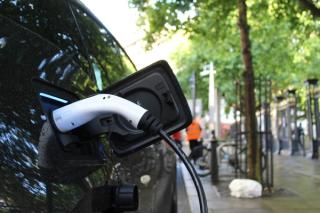
As more electric vehicles (EVs) are produced and purchased, new opportunities for using their stored energy are emerging, and this relatively clean power has the potential to transform the way we think about and build sustainable developments and communities.
SLR is at the forefront of sustainable solutions and is deploying its world-class expertise to help developers rethink the nexus of power and parking to benefit residents’ quality of life through taking advantage of this new local, more reliable, and more cost-effective energy source.
Typical residential developments provide one or more parking spaces for each residential unit. As consumers adopt EVs, the demand for EV charging at these developments is growing. While we typically think of charging demand as an energy drain, charging infrastructure presents an opportunity to build bidirectional portals, where energy can flow from the grid to the EV and from the EV back to the grid when needed.
SLR is advising developers on how to leverage the potential energy that a collective fleet of private EVs could provide. Imagine 250 EVs’ worth of batteries storing energy and releasing it during a peak power episode, a storm-induced localised power failure, or even for a specific low-level purpose, such as heating a pool or keeping outside lights on. As technology moves forward, the challenge is not in the infrastructure design per se but in the accurate modelling of future energy demand, EV adoption and usage, price variability, and consumer understanding and acceptance of how this system would work.
That’s where SLR comes in. Our transport planning and sustainable energy specialists work together to deploy proprietary models to assess site viability, energy consumption and generation potential, and the feasibility of the designs. For example, in mixed use developments in the UK, SLR has advised on the provision of off-plot parking alongside potential solar PV and battery storage to act as a 'power plant' for the development.
Internationally, urban development is facing growing pressures and opportunities: energy costs are on the rise, many power grids are at or nearing capacity, and optimal real estate is at a premium, with parking restrictions and expectations that limit opportunities for innovation and carbon reduction. Government agencies and private developers are under pressure to transition to cleaner energy sources and create affordable, healthy, and sustainable living spaces.
Vehicle to Grid (V2G) opens up a new horizon for development design. For example, by connecting EVs to the power grid, developers could replace some or all individual on-site parking with centrally managed and shared parking hubs, which would reduce embedded carbon and enable the connected EV batteries (unused 95% of the time) to serve as active community-scale energy resources. The benefits of having shared parking hubs with their inherent space-efficient design alone creates opportunities for landscaping, public open space, pollinator gardens, water-detention basins, and renewable energy generation. If the design supports microgrid integration, this could help lower household energy bills, reduce demand on power grids, and minimise the need for costly new infrastructure.
V2G deployment can yield secondary benefits such as facilitating the design of greener, healthier places that reduce urban heat island effects, increase tree canopies, and create open space to enhance resident wellbeing as well as reduce on-site parking requirements that could increase the potential for higher development yield.
Likewise, V2G has significant potential benefits for commercial fleets where vehicles are parked at a central location overnight. Energy from vehicle batteries can support the grid during peak power demand and, with smart charging solutions, vehicles can re-charge outside of demand peaks in order to be ready for use.
For developers, the benefits are clear. V2G infrastructure can reduce capital and operational costs through optimised parking layouts and lower energy infrastructure requirements, improve reliability and resilience with microgrid energy systems that reduce exposure to energy price volatility, and align with investor priorities and consumer demand for carbon reduction, biodiversity net gain, and sustainable mobility—not to mention the marketability of supporting healthier, greener, and more attractive communities.
Have a project in mind that you think might be suitable for V2G? Please contact us. We would love to learn more about your challenges and offer innovative and tailored solutions!
Contact Us
by Sophia Davison, Henry Partridge