From compliance to capability: What 2025 revealed about battery supply chain due diligence
by Katie Redmond, Nanxi Xu
View post
After four years of restrictions, Ireland has revised its approach to large energy users. The Large Energy User Action Plan (LEAP) and the updated connection policy from the Commission for Regulation of Utilities (CRU) represent a clear move from moratoria to a plan-led, energy-first model for data centres and other energy-intensive industries.
This is not a return to “business as usual.” Ireland now requires that new demand must actively support, rather than strain, the energy system.
Data centres accounted for approximately 22% of Ireland’s electricity demand in 2024, with projections nearing 30% by the early 2030s if left unmanaged [1]. Grid capacity constraints, especially around Dublin, led regulators to pause new connections in 2021. While that pause has ended, Ireland has now implemented much stricter conditions.
LEAP introduces 17 coordinated actions across planning, grid delivery, and regulation, based on three core principles:
From an energy perspective, three key shifts are critical:
For data centre and digital infrastructure stakeholders, the opportunity is significant. However, energy strategy must now drive site selection rather than follow it:
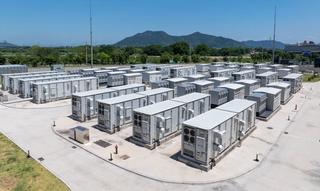
The green energy park model is now central. Data centres will co-locate with renewable energy and storage clusters, or link with nearby solar and wind farms, as seen in Amazon’s recent Offaly partnership [3]. This shift moves development focus to the Midlands and West, easing pressure on Dublin. Developers must adapt by becoming renewable energy producers or partnering with existing generators—a model promising but challenging in infrastructure and master planning, especially for scale and rural locations.
To begin adapting to the green energy park model, developers should first identify potential partners in the renewable energy sector, focusing on those with existing or planned projects in the relevant regions. Engaging with local authorities and regulatory bodies early in the planning process can help navigate regulatory challenges and ensure alignment with regional development goals. Additionally, conducting feasibility studies to evaluate the suitability of locations based on proximity to renewable resources and existing infrastructure is recommended. These steps can provide a foundation for successfully integrating into the new energy landscape.
Ireland is once again open to data centres, but only those that strengthen the energy system rather than strain it. LEAP is not simply about lifting a ban; it is about redefining the relationship between digital growth, grid capacity, and balanced regional development. For those prepared to prioritise energy, 2026 could mark the beginning of Ireland’s next data centre chapter.
SLR supports developers, investors and large energy users across this journey - from early power strategy and site screening through grid engagement, connection strategy and delivery. Please contact our team to find out more.
Get in touch
by Katie Redmond, Nanxi Xu

by Alyssa Limmena, Amy Brimmicombe, Nicola Herschell

by James Balik-Meacher, Genevieve Sew