Beyond compliance: Making climate reporting useful to the business
by Miguel Oyarbide, Melanie Smith
View post
For many Australian businesses, the first climate reporting cycle under Australian Sustainability Reporting Standards (ASRS) was necessarily compliance-led. Understand the requirements, complete a gap assessment, identify the right people, source data, undertake scenario analysis, meet assurance requirements and ultimately get the report out.
It was a significant undertaking, but now that the foundations are in place, a more important question emerges. Is the effort adding value?
This is not simply about refining the disclosure but rather about connecting climate analysis to business implications. Where are our vulnerabilities, not just our exposure? How could they affect the business? What is the appropriate response, who owns it and what decisions need to follow?
For those preparing for the next reporting cycle, the opportunity is to turn the effort invested in reporting into clearer choices, stronger evidence and practical delivery.
After supporting more than 35 businesses to navigate ASRS, we know that good external advice can guide businesses through the process, improve efficiency, produce useful insights, and reduce complexity. But we also know that material decisions and the integration of climate considerations into the business needs to come from within.
Sustainability, finance, risk and operational teams each bring a different perspective, and clear internal ownership is what allows those perspectives to translate into action. Without it, climate reporting can remain a parallel exercise rather than part of how the organisation makes decisions.
Naming a risk is therefore only the starting point, and useful information needs to show where the exposure sits, what it could mean for the organisation and how management intends to respond.
A distinction between qualitative and financial materiality is important and can become conflated during the reporting process.
A qualitative assessment asks whether a risk could affect future performance or matter to stakeholders. A financial assessment considers the effect through a financial lens, but that judgement may only become possible once a pathway has been established and some degree of quantification is available.
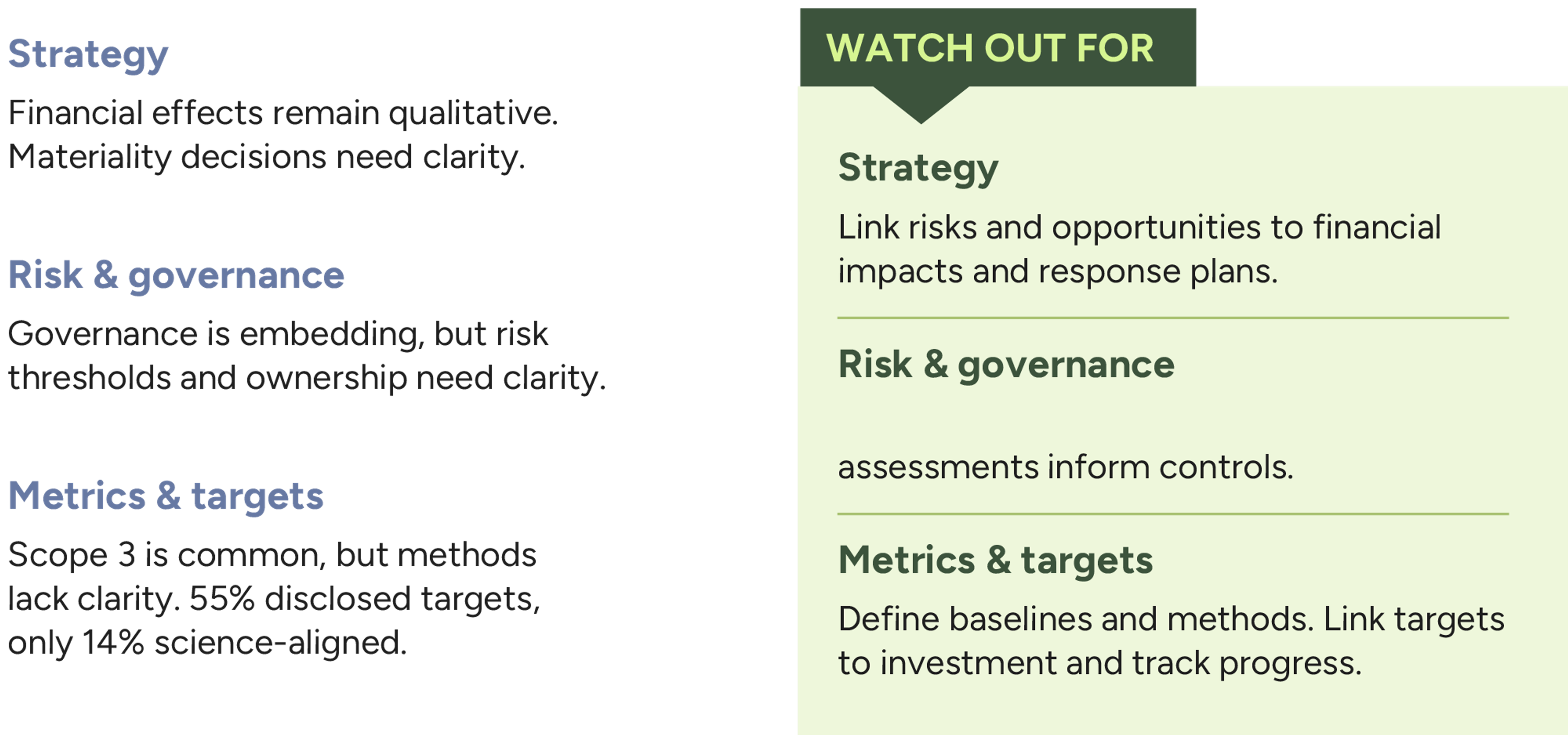
Closer engagement between sustainability, risk and finance is critical. Sustainability may drive the climate work, but finance needs to understand and endorse the conclusions, particularly where analysis begins to translate into financial effects.
Sustainability teams may be comfortable working with scenarios, ranges and uncertainty, while finance may seek firmer conclusions. Leaving that tension until final sign-off can make it harder to reach agreement on materiality, assumptions and the treatment of financial effects.
Regular engagement before and during the reporting process creates space to test judgements, resolve differences and build shared ownership before conclusions reach executive or board review.
The goal is not quantification for its own sake. It is establishing a traceable connection between a material climate risk or opportunity, its potential effect on the business and the response the organisation may need to take.
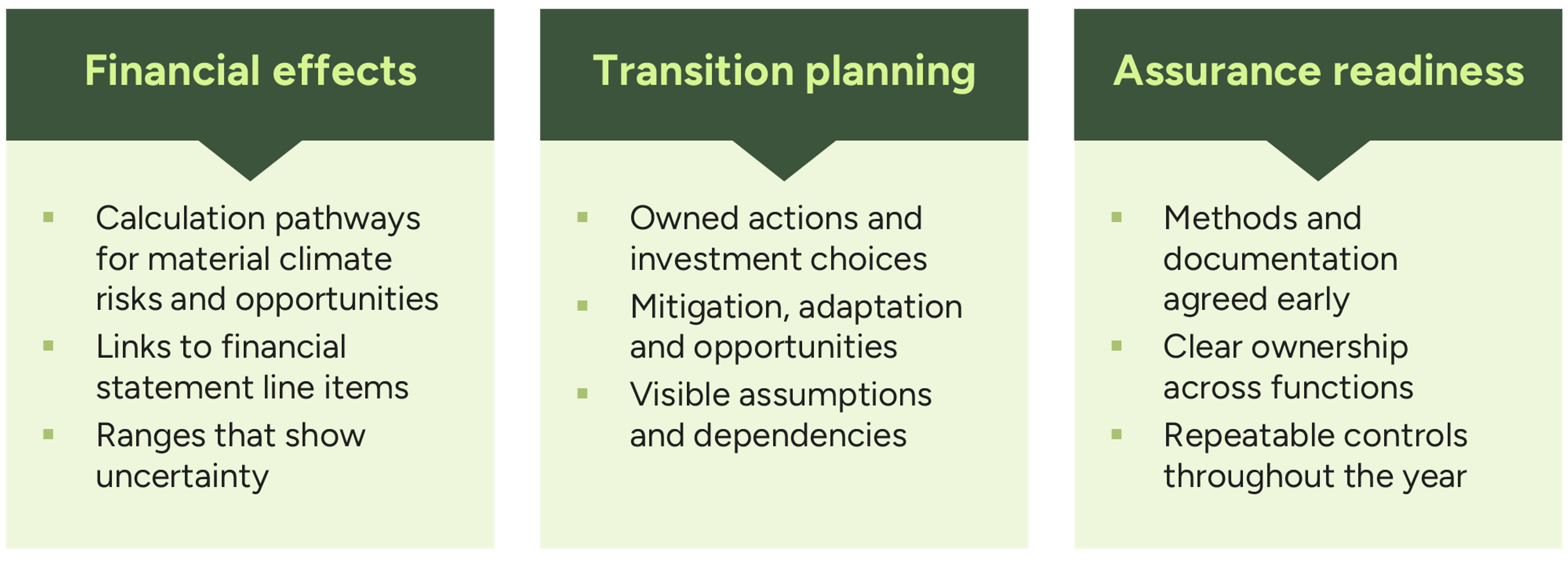
Assurance created substantial practical challenges during the first reporting cycle, including extensive documentation requests, scrutiny of governance processes, inconsistent interpretations and, in some cases, late changes to expectations. Advice could also vary across and within assurance providers, leading to rework when evidence standards or methodological expectations were raised late in the process.
The practical lesson is to engage early and agree documentation requirements, evidence expectations, methodologies and interpretations before drafting is well advanced.
Rather than rebuilding the evidence trail at the end, the focus can shift towards repeatable controls, documented judgement and clear approvals throughout the year. Dry runs and pre-assurance engagement can also help expose gaps before the formal reporting process begins.
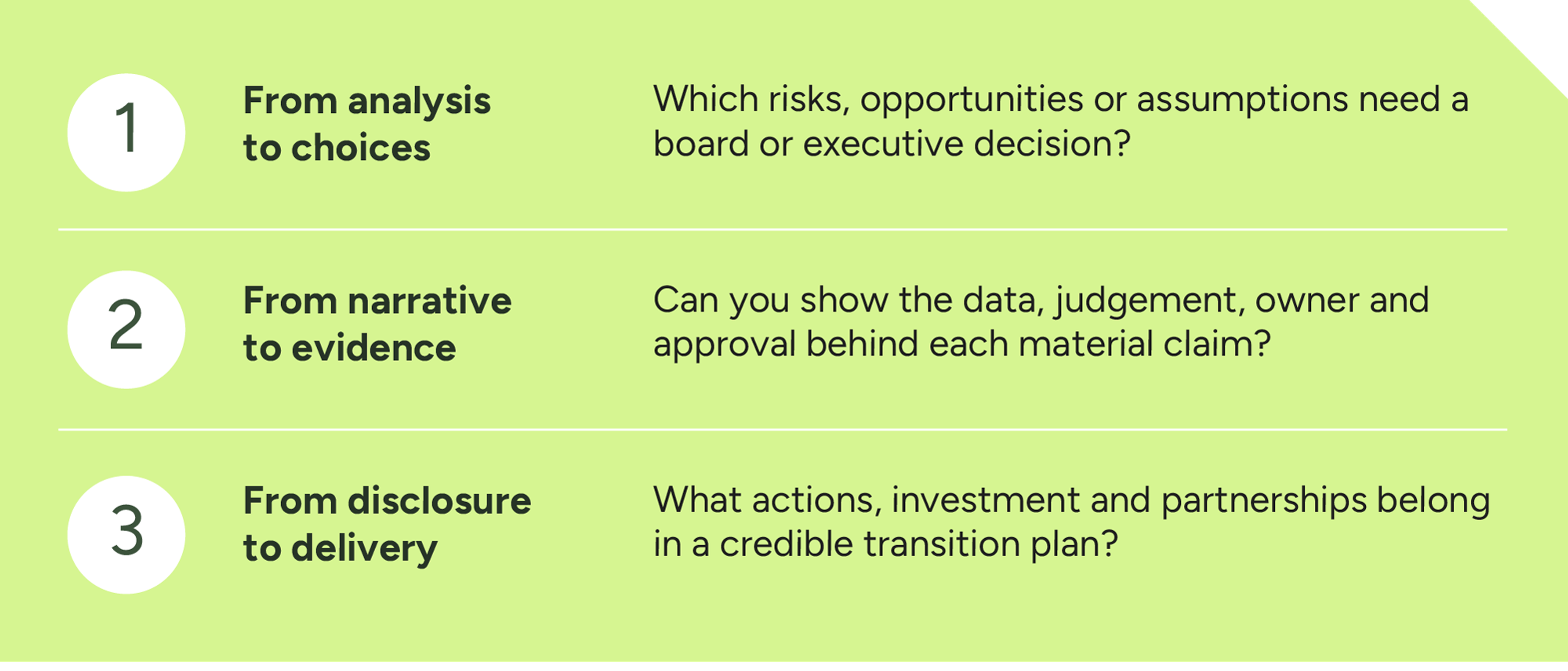
The first reporting cycle showed how much work can go into building the foundations for climate disclosure. The opportunity now is to use those foundations to inform better business decisions.
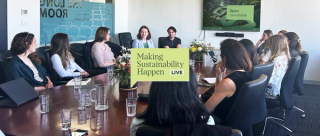
These themes emerged through SLR’s Making Sustainability Happen: Live series, which brings together industry practitioners, technical specialists, clients and stakeholders to consider practical sustainability challenges and opportunities.
Download the factsheet to see where your business sits under ASRS, or get in touch with our team to discuss what the requirements mean for your organisation.
by Miguel Oyarbide, Melanie Smith
by Alison Kemp, Sophie Blackmore, Lily Dunkley
by Charlie Seventekin, Ian Cronshaw