Data centre backup power may be temporary, but its air quality impacts aren’t
by Ben Turner
View post
This article is part of a wider series of Insights that share SLR's perspectives, expertise and experience across the evolving data centre and digital infrastructure landscape. Explore related insights below:
Data centre backup generators have historically attracted little regulatory attention because they rarely run. But fleets can now rival power stations in installed capacity, and their growing scale is changing how they are regulated
Three things are converging: fleets are getting bigger and more clustered, regulators are writing rules specifically for them, and projects are racing to market while those rules settle. Together, that is turning air quality into a live design risk. Get it wrong and projects can face redesign, added cost and delay, a significant issue in a market where pace matters.
Data centres need a highly resilient electricity supply and while grid electricity is the main source, backup generators that typically run on diesel engines are the go-to solution when that supply is interrupted because they can start quickly. Emergency operation is rare, but the generators do run regularly for testing and maintenance to make sure they are available when needed.
Diesel exhaust contains oxides of nitrogen (NOx), including nitrogen dioxide (NO2), as well as particulate matter (PM10 and PM2.5). Exposure to these pollutants is associated with respiratory and cardiovascular harm, adverse pregnancy outcomes and premature mortality, and impact sensitive ecosystems. A national study published in 2025 estimated that combined exposure to PM2.5 and NO2 was attributable to approximately 3,684 premature deaths in Australia in 2015 [1].
Emissions from backup generation are also attracting greater community attention. Concerns about diesel fumes from NEXTDC’s M2 data centre in Melbourne recently gained widespread attention on social media and were subsequently reported in national news [2] . While air quality has not historically been one of the issues most closely associated with data centres, it is increasingly becoming a source of community concern.
Environmental frameworks have generally treated emergency generators differently from power plants that run every day. While that makes sense when their use is genuinely infrequent, the resulting lower level of scrutiny becomes harder to justify as generator fleets grow to rival the scale of power stations.
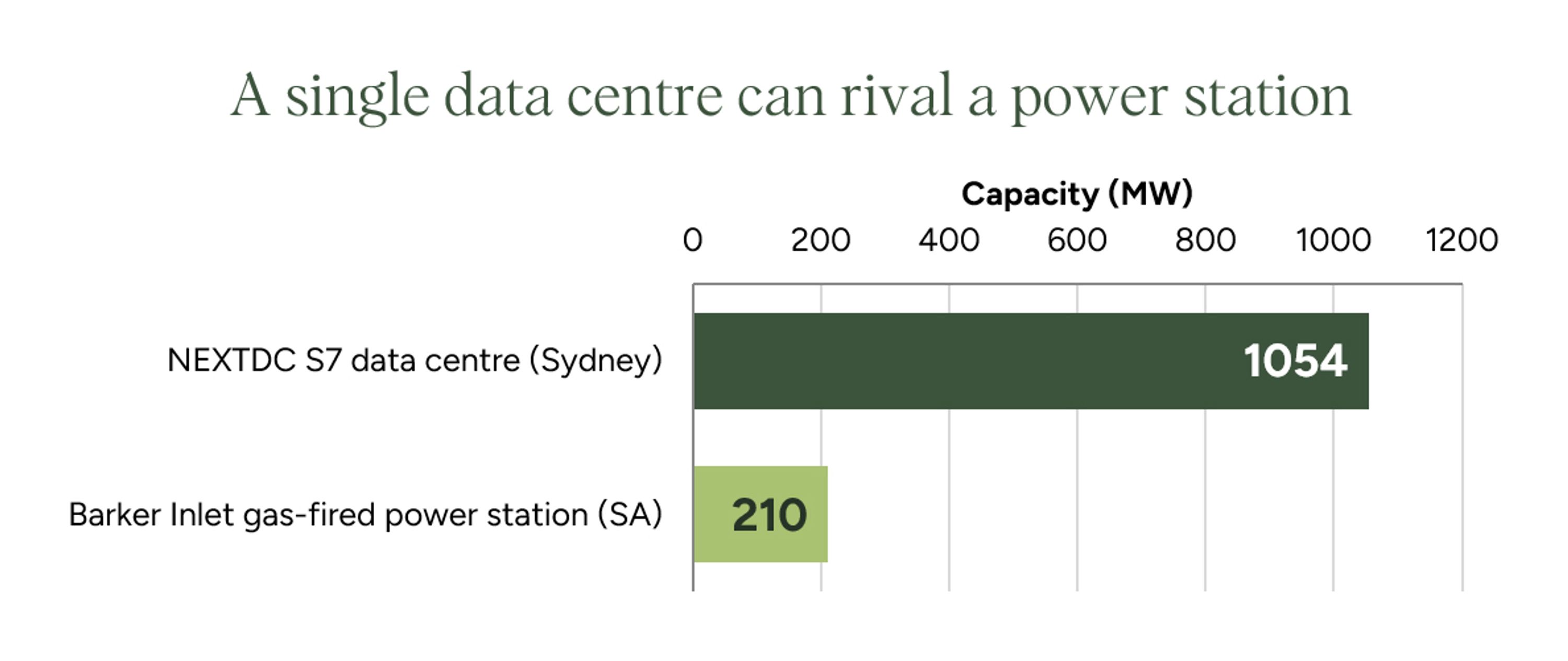
For instance, NEXTDC's planned S7 data centre in Sydney is backed by up to 340 diesel generators of 3.1MW each [2]. That is around 1 GW of installed generating capacity, about five times that of South Australia's 210MW Barker Inlet gas-fired power station [4].
The generators may still be emergency plants, but when a fleet of that scale does operate (whether during an outage or routine testing), its emissions need managing.
A data centre in Western Australia may not require an environmental licence because emergency or standby plant is excluded under WA's environmental licensing framework (Part V of the Environmental Protection Act 1986) [5]. These sites still go through planning and development approvals however, the exclusion means less scrutiny of emissions at application, and no licence conditions are required on how the plant is operated and maintained.
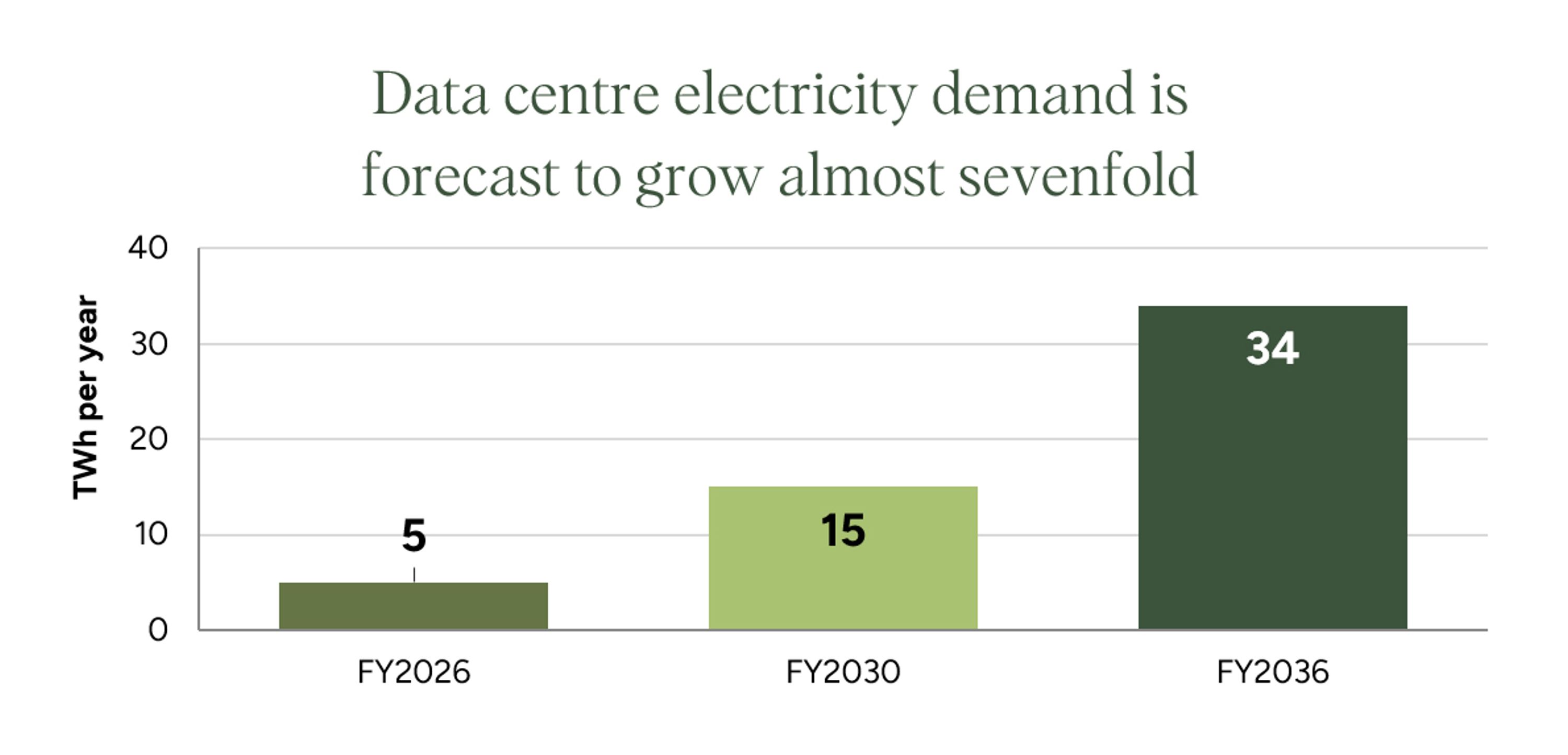
It's not just the size of facilities, but the pace of growth. Australian Energy Market Operator (AEMO) estimates that about 165 data centres in the National Electricity Market (NEM) consumed around 5 TWh of electricity in FY2026 [6]. Under its Step Change scenario (AEMO's central scenario), it forecasts 15 TWh by FY2030 and 34 TWh by FY2036. These are electricity demand figures, but they show how quickly backup systems will need to be designed and scaled up to keep pace.
Scale is also a matter of location, with data centres tending to cluster where there is grid capacity and a network connection, meaning a single facility is often one of several nearby. Together, they can amount to several power stations' worth of generating capacity in a small area, with the risk then becoming cumulative. A regional power outage could see multiple generator fleets start at once, while routine testing at neighbouring data centres could also coincide. Assessments therefore need to consider not only the project's own contribution, but potentially the cumulative impact of neighbouring facilities, despite detailed information on about their facilities not always being available.
All of this makes air quality assessments harder, and the outcome has a direct bearing on critical design aspects such as how the data centre can operate and what abatement it needs.
Regulators are catching up, but they are asking two separate but connected questions:
Passing the first test doesn't guarantee passing the second. Engines can each meet their limits and still collectively cause unacceptable pollution off site, especially where existing levels are already close to the standards. If the assessment shows this, the project then must change, through more abatement, taller stacks or limits on operation, and that can be costly.
NSW's August 2026 Data Centre Guidelines make both questions explicit [7]. In urban areas, engines must meet the NSW Clean Air Regulation limits for stationary engines (450mg/m3 for NOx and 50mg/m3 for solid particles) which have conventionally applied to plant that runs day to day. In practice this means selective catalytic reduction (SCR), an exhaust treatment system that removes most of the NOx. On top of that, an air quality assessment must show the fleet won’t cause unacceptable impacts on community health.
Air quality assessments now need to do more than they once did, considering routine testing, emergency operation and cumulative effects with neighbouring sites, many of which are beyond the developers control. This also needs to be assessed against regulatory requirements that are still relatively new.
The results depend heavily on the weather with wind speed, wind direction and atmospheric stability determining where emissions travel and how much they are diluted before reaching the ground. Because an outage or test could occur at any time of year, the assessment must consider the full range of meteorological conditions. A conservative approach is to model the generator fleet (and neighbouring facilities) across every hour of a year of weather data and identify the hour producing the highest off-site impact (Figure 3).
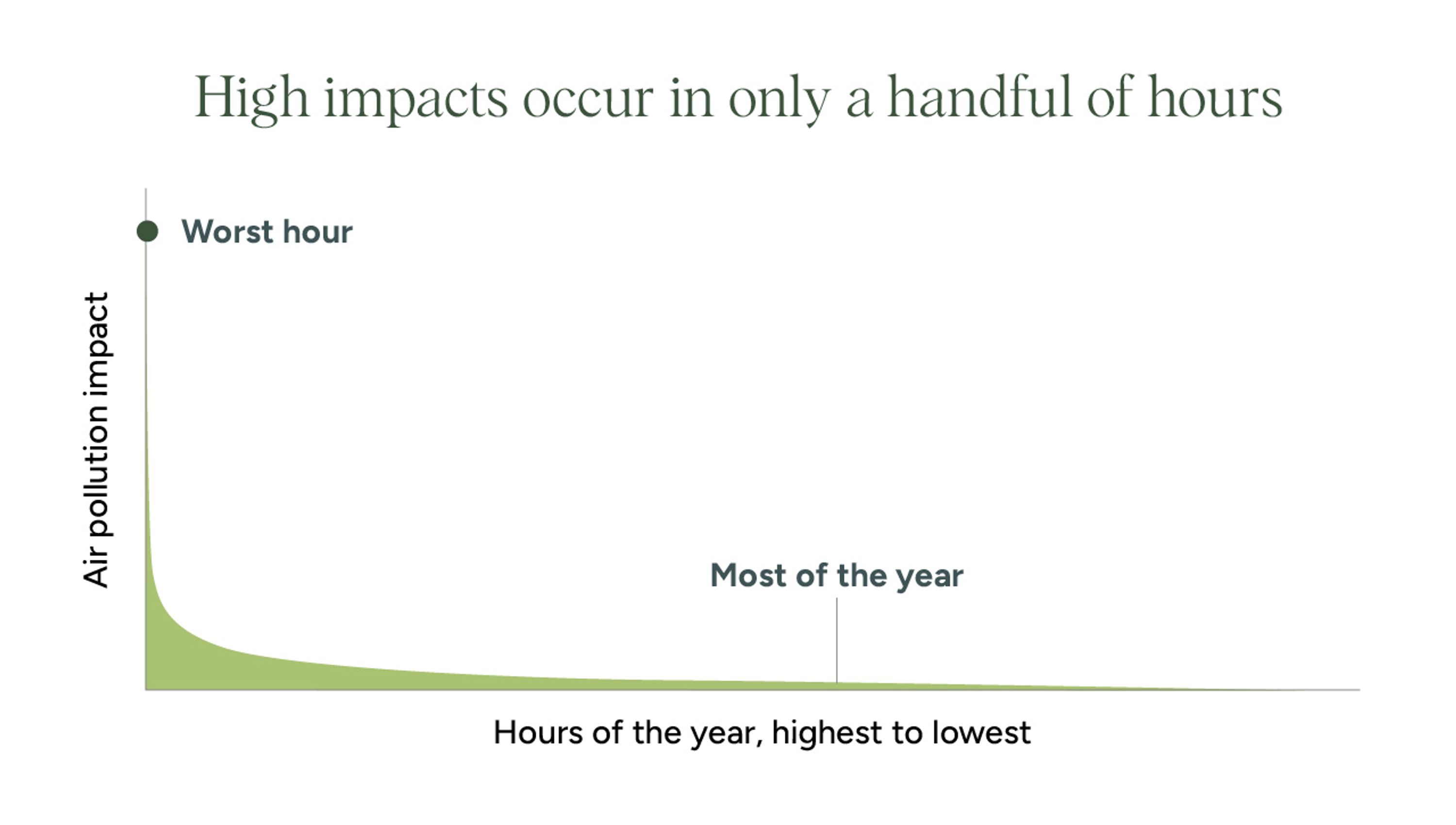
That worst-case approach is simple, quick and easy to defend, which has obvious advantages in a fast-moving market. But it can also combine operating and meteorological conditions that have a very low probability of occurring together.
A fleet may run for only a small number of hours each year, and routine testing might involve only one or two engines at a time, while emergency outages are rare. The chance of the full fleet operating during the single worst dispersion hour of the year is therefore low, and lower still if the assessment also assumes neighbouring data centres are operating at the same time. At that point, the question becomes one of probability: how likely is that combination of events to occur? Taking at face value, this theoretical worst case can result in operating restriction that may never be needed in practice.
That does not mean the worst case should be ignored. It means the assumptions and the likelihood of them occurring together should be understood before they are allowed to drive design decisions.
The worst case is a sensible starting point, but it shouldn’t automatically dictate the design. The skill is knowing when it can be refined, how far, and what regulators will accept. In the absence of formal guidance, much of this comes from experience and engagement with regulators on real projects. Done early, that can stop a conservative modelling assumption turning into unnecessary abatement, redesign or delay. Having an experienced air quality partner involved early can therefore make a material difference.
Many developers are investigating opportunities to expand within existing footprints, upgrade legacy infrastructure, and respond to rising energy, emissions, climate and nature-related pressures. SLR provides end-to-end advisory services across the data centre lifecycle, supporting clients through planning, design, delivery and ongoing operational performance, as well as retrofit and optimisation advisory, compliance management and ESG performance improvement.
Our global multidisciplinary team works with hyperscale developers from the earliest stages of a project, providing support across site selection, feasibility, planning and approvals, regulatory and social licence considerations, and integrated design and delivery.