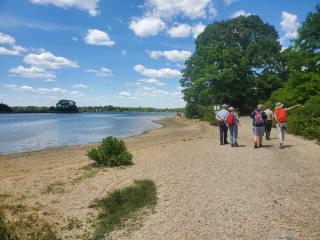
Formulating a Site Plan to Support the Ecology and Management Needs of the Bluff Point Properties, in Groton CT
Read more
The Ontario Building Code is the legislative framework governing the construction, renovation and change-of-use of a building in the Province of Ontario. It establishes detailed technical and administrative requirements for new construction in the Provence of Ontario.
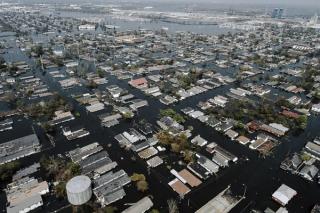
Previously, the Ontario Building Code did not take into consideration the effects the changing climate has on new and existing buildings. Over the last few years, the changing climate has increased the frequency and intensity of extreme weather, increased weather-related disasters, impacted the safety of existing structures, increased premature weathering, changed engineering and maintenance practices, and altered practices for building codes/standards.
These climate changes made the building code outdated. In many cases, this change of climate has resulted in structures that have not been designed to withstand the extreme weather events we are currently seeing, let alone the future impacts of climate change. The growing risk of building and infrastructure failure, as well as the associated hazards to the well-being of Canadians, creates an increasing need to adapt and build resilience.
The need for the Ontario Ministry of Municipal Affair and Housing (MMAH) and Ministry of Environment, Conservation and Parks (MECP) to update the building code was determined by structures being strained beyond their current design limits. SLR was asked to update the Ontario Building Code to reduce the impact of physical deterioration of the buildings. Our team led the research group to develop a new set of climate variables for Building Codes with climate change incorporated into the roots of the guiding principles. The new building codes reflect future changes in climate extremes that are validated by historical data.
Our study provided insight to conduct comprehensive risk assessments and forensic studies for existing climate sensitive infrastructure. Particularly focusing on critical climatic thresholds, to formalise asset management and maintenance, investigation of the links between soft (e.g. ecosystems services) and hard engineering solutions (e.g. codes and standards), and to improve emergency planning and services.
The report was titled, “Extreme Climate Change Indices for Building Code” and has been implemented as the new Ontario building standard.
